The
Mission
to Seafarers: Port of Thunder Bay
The Port of Thunder Bay and the Mission to Seafarers
by Rev'd Ed Swayze
April 13, 2012
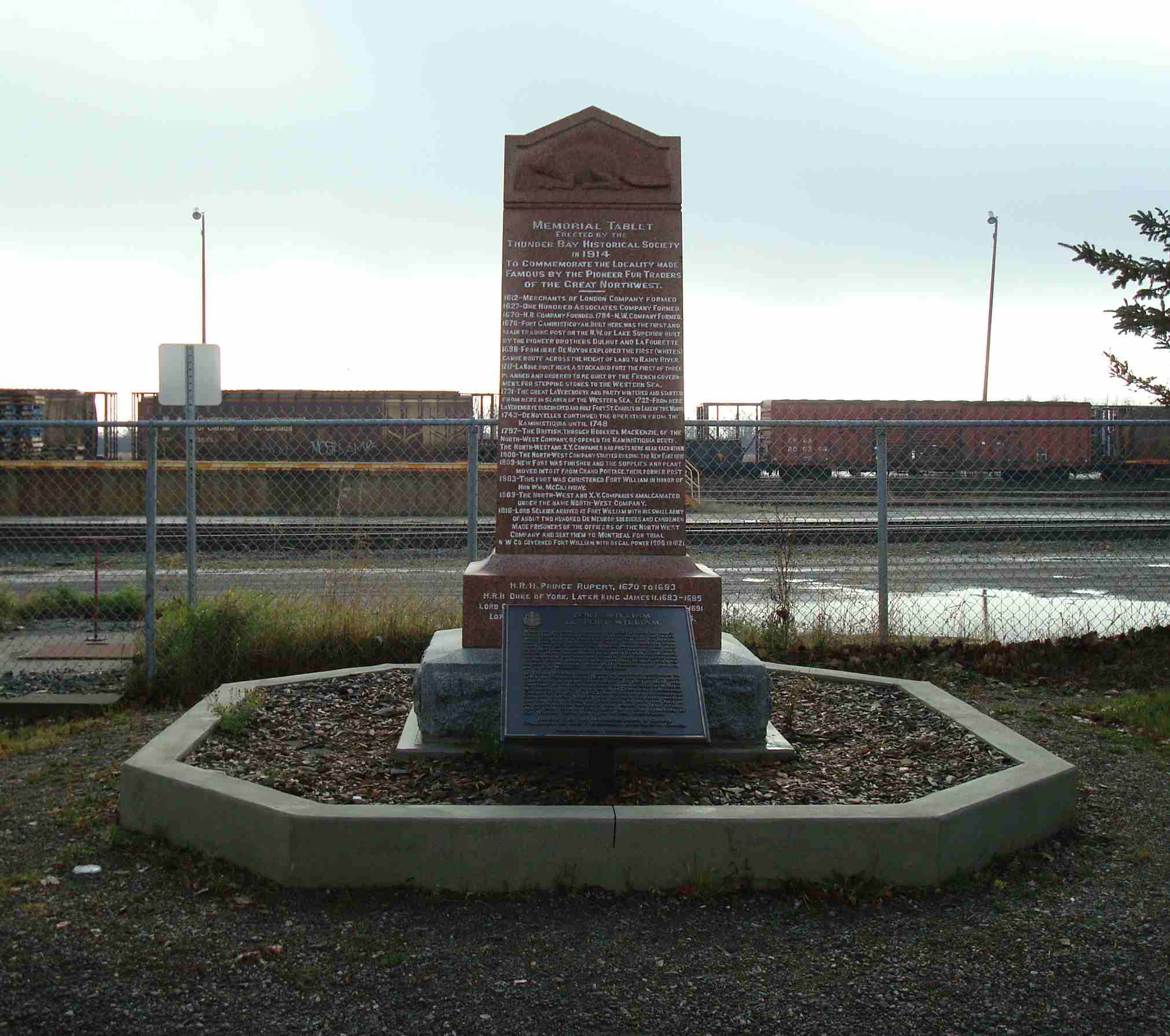 The Great Lakes were a means of transportation, initially for
canoe then ship. LaSalle’s ship Le Griffon, was the first ship to sail on the
upper lakes. The Port of Thunder Bay had its beginnings with the fur trade. The
fur trading fort, Fort William, was located in 1805 on the Kaministiqua River in
what is called the East End. As Upper Canada was settled in the early 1800’s,
locks were built: the Welland Canal connecting Lake Ontario and Lake Erie, and
on the St. Mary’s River at Sault Ste Marie connecting Lake Superior to Lake
Huron, which enabled ships to travel from the Lakehead to Montreal.
The Great Lakes were a means of transportation, initially for
canoe then ship. LaSalle’s ship Le Griffon, was the first ship to sail on the
upper lakes. The Port of Thunder Bay had its beginnings with the fur trade. The
fur trading fort, Fort William, was located in 1805 on the Kaministiqua River in
what is called the East End. As Upper Canada was settled in the early 1800’s,
locks were built: the Welland Canal connecting Lake Ontario and Lake Erie, and
on the St. Mary’s River at Sault Ste Marie connecting Lake Superior to Lake
Huron, which enabled ships to travel from the Lakehead to Montreal.
Prince Arthur’s Landing, the northern part of the Port of
Thunder Bay, was going at the time of the Red River Rebellion when troops were
sent by ship to the Lakehead and landed. Dawson Road was built from the Lakehead
to the Red River in Manitoba to facilitate their movement. The building of the
Canadian Pacific Railway in 1885 gave Fort William its boost. Soon after the
Canadian National Railway was built with a station in Port Arthur. The two
communities competed with each other, Fort William and Port Arthur, until they
amalgamated in 1969 as Thunder Bay.
The ships plying the Great Lakes carrying people and goods
were initially sailing vessels. Coal fired steam ships replaced them at the turn
of the century. Motor or diesel ships came into being about the time of World
War 2. Loading was slow aboard these small ships and they stayed in port a
number of days. Crew quarters were cramped, and the hospitality shown seafarers
was a hostel.
As part of the large capital projects built by the Federal
Government in the 1950’s, the St. Lawrence Seaway was opened in 1959.
Previously smaller lakers called canalers took cargo to Montreal where it was
loaded onto ocean-going vessels. Once the Seaway was built, larger ships were
constructed. These ships had more spacious crew quarters and crew did not need
to sleep ashore. Grain elevators were automated, which loaded ships faster. The
stay of a ship was shorter and crews had less time ashore; a hostel ministry was
no longer needed. The port statistics reflect these changes, 1964 saw the most
number of ships visiting the port with 1749 ships and 16,955,937 tonnes shipped,
and 1983 saw the most tonnage shipped with 1359 ships and 22,397,940 tonnes
shipped.
Keefer Terminal, located in the inter-city area between Fort
William and Port Arthur, opened in 1959. It was a package freight terminal,
replacing loading docks in Port Arthur and in Fort William along the
Kaministiqua River.
In response to the foreign sailors on ocean-going ships that
were coming to the Lakehead for the first time, the Missions to Seamen station
in Thunder Bay was
founded December 6, 1961 St. Nicolas' day. A trailer was
set up at Keefer Terminal to serve as the Seamen’s Centre.
The local Anglican Church Women (ACW) groups from Thunder Bay
parishes staffed the Seaman’s Centre in the evening watch. Soccer games were
organized for the largely British crews. A sub-group of the Mission called the
Harbour Lights organized dances for seafarers, inviting women from parish
churches to attend.
In the 1970’s the shipping container revolutionized the
shipping industry. Now a container was loaded at a warehouse, and shipped by
truck, rail or ship. Vancouver, Montreal and Halifax became large container
ports, and containers traveled across Canada by rail. This meant the demise of
Keefer Terminal as a package freight warehouse.
Another development during this period was the introduction
of flags of convenience. A ship is registered in a country, flies its flag and
abides by its labour regulations. This meant that the manning of ships was
globalized and crews from the whole globe manned ships, replacing the British
domination of shipping. In 1980’s South Koreans crewed many ships, but as
their economy grew they became over priced. In the 1990’s the ocean-going
ships visiting Thunder Bay were roughly 1/3 Filipino, 1/3 Indian and 1/3 eastern
European. The Chinese are poised to replace these crews, but their lack of
fluency in English, the working language of ports around the world, has
inhibited them so far.
The mid 1970’s to the 1980’s saw the port being the
busiest in its history, with 1983 being the peak year. Grain shipments to Russia
drove this activity. When the Federal Government ended loan guarantees to
Russia, shipments stopped. During the 1980’s the Rev’d Canon David Bradford was
port chaplain, full-time during the shipping season.
The Rev’d Ed Swayze was appointed in 1994 for the Mission to Seafarers and at St. Stephen the Martyr
Anglican Church. A different model of ministry was required: he visited ships in
the daytime and made appointments for the van to pick them up. Volunteer Watch
Keepers and Drivers were recruited to run the Watch in the evening. Warm
clothing was collected to keep seafarers warm in the cold spring and fall.
In the global shipping market shipping rates dropped.
Shipping out of the Port of Thunder Bay also declined. The number of lakers
dropped, but the number of ocean-going ships visiting the port during the 1990’s
actually increased because their rates were cheaper.
Major changes in technology occurred: fax machines,
computers, and cell phones were introduced as tools that helped increase
productivity in business and with the seafarer’s ministry. The introduction of
long distance telephone cards has had a big impact on seafarers’ ministry
worldwide. Seafarers could now phone home from a pay phone without coming to the
Seafarers’ Centre to use the phone. Some Centres have closed up because
seafarers no longer came. The Thunder Bay Mission began to sell a phone card
offered by North American port chaplains. Watch Keepers dialing calls for
seafarers and estimating the charge became a thing of the past. At Thunder Bay,
the Mission responded by putting in computers with web cams and wireless
Internet for seafarers to access the Internet and
a games table was purchased.
The consequence of 9/11 was that the security at port
facilities tightened up. It became more difficult for crew to get ashore and for
people from Thunder Bay to help seafarers. The Mission to Seafarers, because it
is a recognized member of the Port community, continues to be able to offer
assistance and get through to help the seafarers.
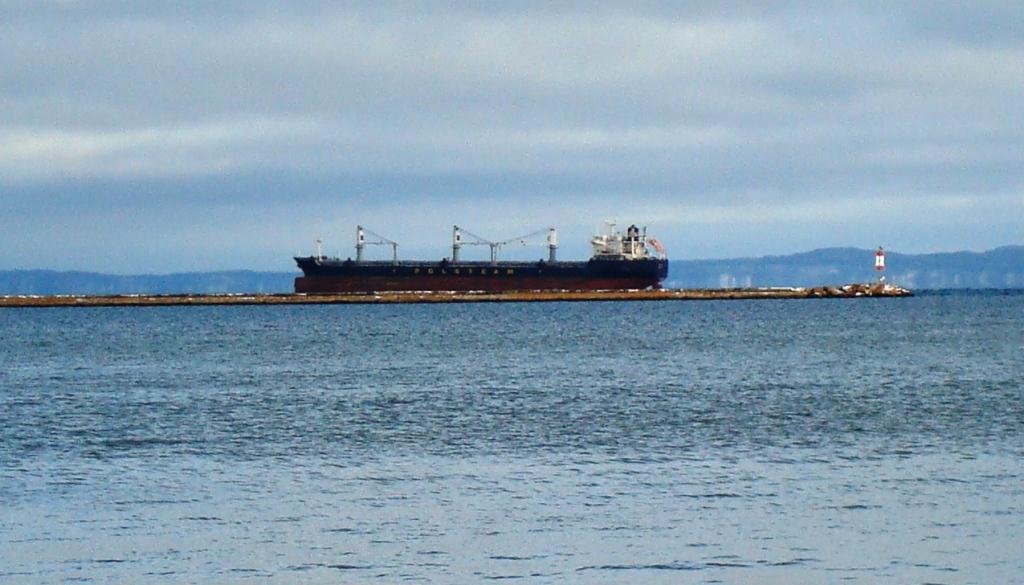 What lies ahead?
New ocean-going ships that fit the Great Lakes locks are
constructed every year. They serve the Great Lakes as well as river systems
around the world. The Port will continue. The concern over green houses gases is
likely to favor ships because they have less impact on the environment than
other forms of transportation.
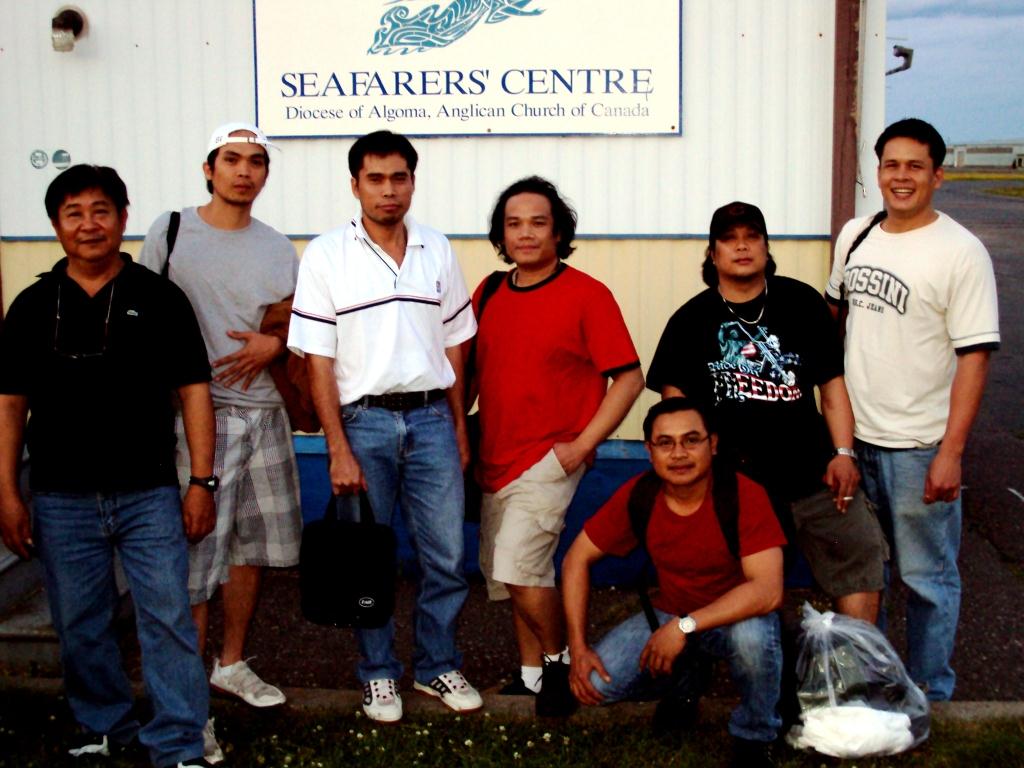 Communications technology will continue to evolve.
Ships have the capability for crew to e-mail home daily, however, this
capability is not available to crew on many ocean-going ships. Some ships have
satellite phones, but until the price of them drops, landlines will still be a
necessity.
Communications technology will continue to evolve.
Ships have the capability for crew to e-mail home daily, however, this
capability is not available to crew on many ocean-going ships. Some ships have
satellite phones, but until the price of them drops, landlines will still be a
necessity.
The value of the Mission to Seafarers is that church people
visit most ocean-going ships and offer them hospitality. Transportation is
provided, which is especially valuable for the more far-flung berths in the
Port. The Mission will continue to welcome strangers into the Port of Thunder
Bay in the name of Jesus.
A
Brief History of the Mission to Seafarers in Thunder Bay
by
Anne Zuliani and Rev'd Ed Swayze
April
20, 2012
Part of an International
Mission
Seafarers’ lives are often
dangerous and lonely, and have been throughout the centuries, with many lives
being lost both in peacetime and in war. Long absences from home and families
tend to cause isolation and undo hardships for seafarers as well as their
families back home. It is to support these individuals that the Mission to
Seafarers exists. It is a worldwide mission of the Anglican Church with Centres
in over 230 ports all over the world, whose purpose is to assist seafarers in
whatever ways possible. As well, other Christian denominations have a maritime
ministry such as the Roman Catholic Apostleship of the Sea or Stella Maris,
which often works in association with the Mission.
The earliest beginnings of the
Mission was in 1835 in England when a young Anglican clergyman, John Ashley,
took it upon himself to start up a ministry amongst the seamen, having noted
that they had no other access to clergy during their long periods of time at
sea. From this the Mission grew, and in 1856 rules and regulations were drafted
for the new Missions to Seamen organization. Before long the Mission became
known in ports throughout the British Isles and overseas. Early on the Mission
worked to eradicate unfair working conditions for the sailors, as well as
providing them with spiritual support. Church vestries were fitted out as
reading rooms for the seafarers, and initially this was considered enough to
meet the needs of these men ashore. Reading rooms eventually developed into
special buildings with facilities for many social purposes. These were known as
Flying Angel clubs and often had sleeping accommodations, light refreshments
and, of course, a chapel.
The Mission was active during
both World Wars, ministering to seafarers from the numerous Auxiliary Fleet and
commercial vessels needed for the war effort. The large numbers of vessels involved
necessitated a new approach to the work, so that rather than chaplains holding
services on board ships, the men were ferried to the clubs where they were
entertained, played games, and took part in services in the chapels. With the
implementation of the convoy system necessary to transport much needed goods to
England and other countries, Flying Angel clubs were established in places the
Mission had not previously been, including Halifax, NS. The success of the
Mission’s efforts during World War II was thought to be based upon the
spiritual foundations of the work itself, the personal nature of the work, and
the development of facilities for the welfare of the seafarers where they could
find comfort, relaxation and companionship.
Following the war years, and as
the shipping industry changed, the Flying Angel clubs also needed to adapt.
Ships had quicker turnaround times and improved standards of crew accommodation
on board, causing the Missions to move into smaller buildings nearer to the
ships. At the same time the Mission gradually expanded its work to new ports in
different parts of the world. In the 1960’s political and economic changes led
to fewer seafarers from the traditional maritime nations of the West, and a huge
rise in seafarers from Asia and Africa, with an estimated two-thirds of the
world’s seafarers now coming from Asia. The 1970s saw the growth of
co-operation between Christian societies ministering to seafarers, and by the
mid-80s the Mission was working ecumenically in over half of its ports
world-wide. Chaplains also found themselves working for justice, as they fought
to better the plight of seafarers who often had to work in unsatisfactory and
sometimes dangerous conditions.
At the start of the new
millennium a decision was made to change the name to Mission to Seafarers,
emphasizing an organization which cares for all regardless of their gender,
nationality or rank.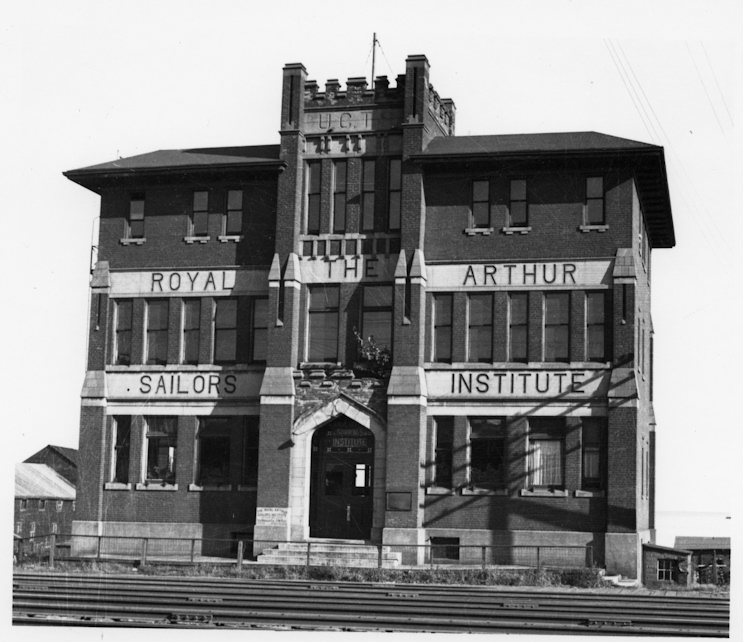
Royal Arthur Sailors’
Institute - Our Predecessor
The earliest beginnings of the
Mission in what is now Thunder Bay can be traced back to 1910 with the Royal
Arthur Sailors’ Institute located on Water Street in Port Arthur and run by local churches including St.
John’s Anglican Church. The official
opening of the Sailor's Institute was written up in the August 20, 1910 issue of
the Port Arthur Daily News. In 1912, the larger building (the Royal Sailors
Institute) was opened. It was specially built for the Institute and designed by
local architect Fred Urry.
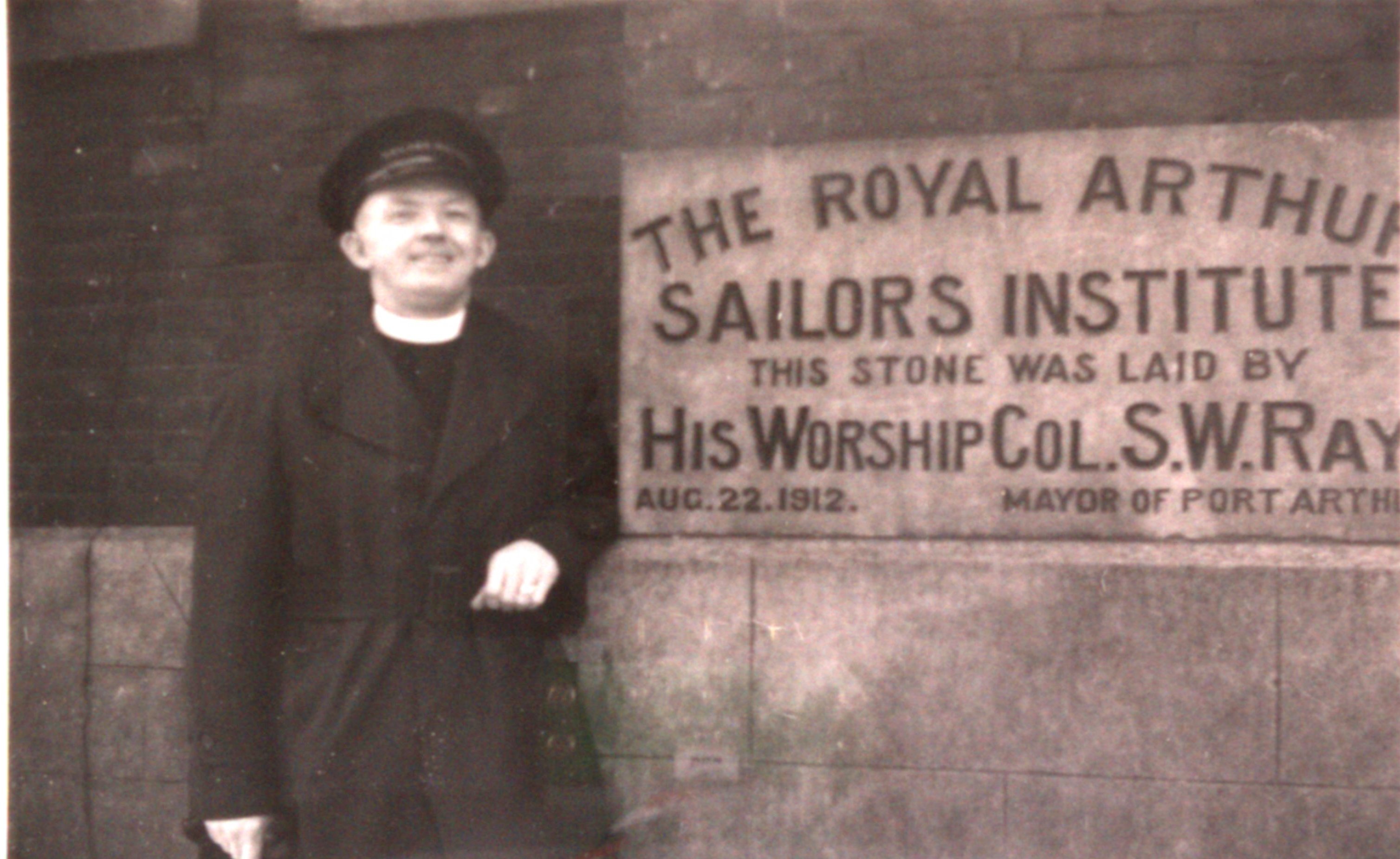 This was essentially a hostel for sailors,
necessitated by the cramped quarters on board the ships of the day, and by the
longer stays in port required to unload and load. It was a non-denominational
mission for the 25,000 Great Lakes seamen and longshoremen who worked under
frightful conditions, the mandate of which was to spread the word of God. In
1945 Rev’d Gron Morgan, a Baptist pastor, was appointed Superintendent, and carried out this very
taxing job for many years. In 1947/48 alone, 24,000 beds were occupied (many
supplied free of charge), and almost 2,000 meals were served. Rev’d Morgan was
often admonished for working so hard, and, at the age of 58, he died
unexpectedly.
This was essentially a hostel for sailors,
necessitated by the cramped quarters on board the ships of the day, and by the
longer stays in port required to unload and load. It was a non-denominational
mission for the 25,000 Great Lakes seamen and longshoremen who worked under
frightful conditions, the mandate of which was to spread the word of God. In
1945 Rev’d Gron Morgan, a Baptist pastor, was appointed Superintendent, and carried out this very
taxing job for many years. In 1947/48 alone, 24,000 beds were occupied (many
supplied free of charge), and almost 2,000 meals were served. Rev’d Morgan was
often admonished for working so hard, and, at the age of 58, he died
unexpectedly.
Mission to Seafarers: Port
of Thunder Bay
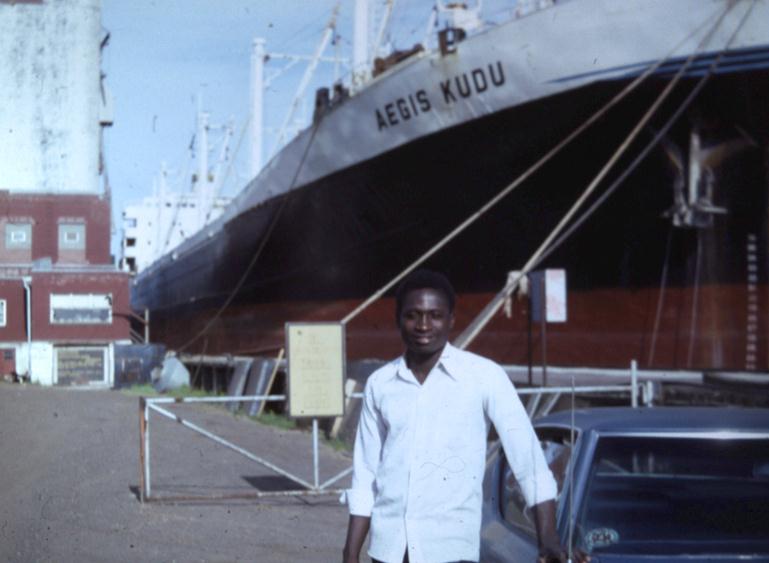
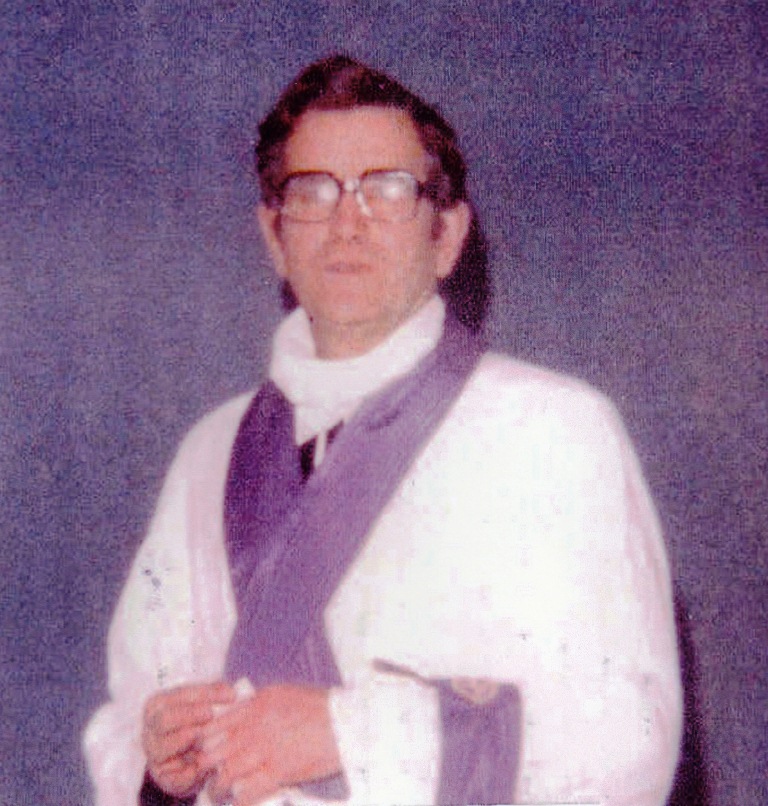 The current Mission to
Seafarers Thunder Bay opened its doors in response to the larger (foreign
ocean-going) ships reaching the Lakehead as a result of the opening of the St.
Lawrence Seaway in 1959. The stays of the ships were short and crews had little
time ashore, so while a hostel ministry was not necessary, there remained the
need for spiritual and social support. In response to the increase in the number
of foreign sailors arriving in the Lakehead for the first time, the Mission to
Seafarers was founded in 1961. In May 1961 Rev’d Canon Stanley Smith, the
chaplain of the Port of Vancouver visited Port Arthur/Fort William and spoke of
his work in Vancouver. He came through the invitation of Rev’d Alvin Thomson
of St. John’s Anglican Church. On December 6, 1961, St. Nicolas’ Day (Patron
saint of Seafarers), a decision was made to establish a station of the Missions
to Seamen and Rev’d Robert Lumley, Incumbent at St. Stephen the Martyr
Anglican Church, started as part-time chaplain in May 1962.
The current Mission to
Seafarers Thunder Bay opened its doors in response to the larger (foreign
ocean-going) ships reaching the Lakehead as a result of the opening of the St.
Lawrence Seaway in 1959. The stays of the ships were short and crews had little
time ashore, so while a hostel ministry was not necessary, there remained the
need for spiritual and social support. In response to the increase in the number
of foreign sailors arriving in the Lakehead for the first time, the Mission to
Seafarers was founded in 1961. In May 1961 Rev’d Canon Stanley Smith, the
chaplain of the Port of Vancouver visited Port Arthur/Fort William and spoke of
his work in Vancouver. He came through the invitation of Rev’d Alvin Thomson
of St. John’s Anglican Church. On December 6, 1961, St. Nicolas’ Day (Patron
saint of Seafarers), a decision was made to establish a station of the Missions
to Seamen and Rev’d Robert Lumley, Incumbent at St. Stephen the Martyr
Anglican Church, started as part-time chaplain in May 1962.
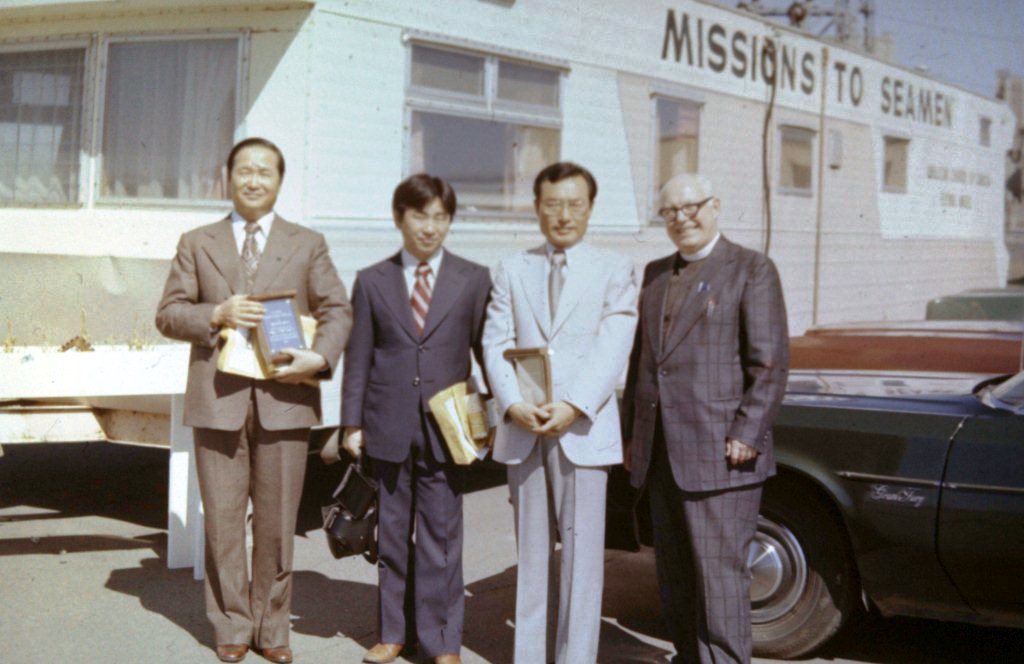 A trailer at Keefer Terminal
served as the Seamen’s Centre, and the local Anglican Church Women (ACW)
groups staffed the Mission in the evenings. Soccer games were organized, and a
sub-group of the Mission called the Harbour Lights Institute organized dances
for seafarers, inviting women from the churches to attend. Volunteers from different
parishes often car pooled in order to ensure seafarers were able to get about;
this practice continued until 1974 when a van was first leased and then
purchased for the Mission. Often Mission chaplains were assistants at local
Anglican churches, or were retired. Rev’d Lumley and Rev’d Swayze were
employed full-time as chaplains and as Incumbents of a parish.
A trailer at Keefer Terminal
served as the Seamen’s Centre, and the local Anglican Church Women (ACW)
groups staffed the Mission in the evenings. Soccer games were organized, and a
sub-group of the Mission called the Harbour Lights Institute organized dances
for seafarers, inviting women from the churches to attend. Volunteers from different
parishes often car pooled in order to ensure seafarers were able to get about;
this practice continued until 1974 when a van was first leased and then
purchased for the Mission. Often Mission chaplains were assistants at local
Anglican churches, or were retired. Rev’d Lumley and Rev’d Swayze were
employed full-time as chaplains and as Incumbents of a parish.
The mid 1970s to the 1980s was
the busiest period in the history of the port, with 1983 the peak. During this
time Rev’d Canon Alvin Thomson was the Port Chaplain, and he was extremely
busy during the shipping season.
Telephone service was
introduced in 1974, which involved pre-arranged calls to family members. Direct
dial calls were introduced in 1979, thus setting the Centre on the path towards
a very different usage of Mission services. In 1975 Rev’d Thomson initiated a working
relationship with the Roman Catholic Church in order to foster ecumenical goals.
A close association developed with the Apostleship of the Sea and St.
Anthony’s Roman Catholic Church in particular.
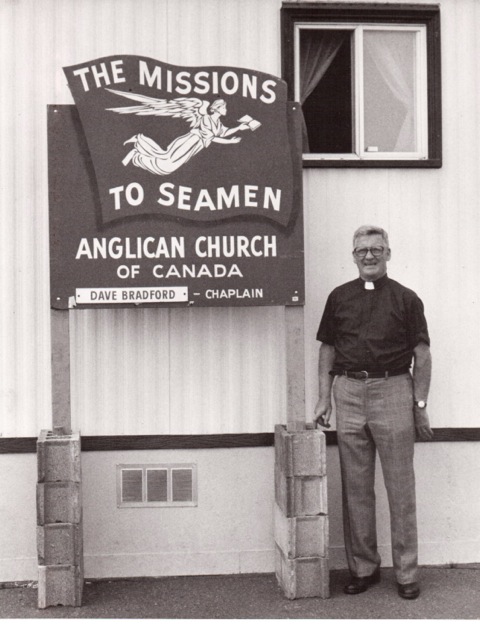 In 1980 David Bradford was
appointed Chaplain to the Mission and subsequently ordained. In addition,
Rev’d Carol Titotto was appointed the first Apostleship of the Sea Chaplain in
Thunder Bay that same year. Rev’d Bradford and Rev’d Titotto often worked
together, particularly for ship visits.
In 1980 David Bradford was
appointed Chaplain to the Mission and subsequently ordained. In addition,
Rev’d Carol Titotto was appointed the first Apostleship of the Sea Chaplain in
Thunder Bay that same year. Rev’d Bradford and Rev’d Titotto often worked
together, particularly for ship visits.
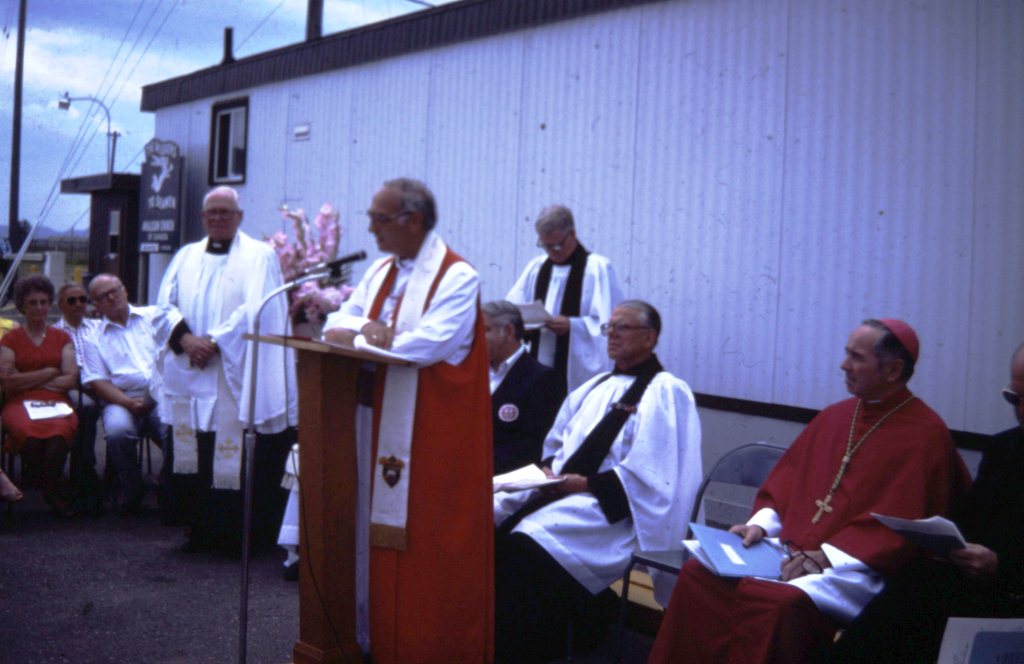 In 1981 the present van and
trailer were purchased using funds from the estate of Bishop E. Q. Jennings,
first Bishop of the Diocese of Fort William. On July 12, 1981 the dedication of
the Centre and the van took place by Rt. Rev’d Frank Nock, Anglican Bishop of
Algoma and the Most Rev’d John O’Mara, Roman Catholic Bishop of Thunder Bay.
This informal collaborative relationship continues to this day and involves
clergy from other faiths as well.
In 1981 the present van and
trailer were purchased using funds from the estate of Bishop E. Q. Jennings,
first Bishop of the Diocese of Fort William. On July 12, 1981 the dedication of
the Centre and the van took place by Rt. Rev’d Frank Nock, Anglican Bishop of
Algoma and the Most Rev’d John O’Mara, Roman Catholic Bishop of Thunder Bay.
This informal collaborative relationship continues to this day and involves
clergy from other faiths as well.
Rev’d Canon David Bradford
served the Mission until the early 1990s. He was full-time during the shipping
season and was seen regularly on board ships. Many enjoyed his popular weekly
feature on local CBC radio called “Harbour News” where he promoted the
Mission and made mention of the week’s activities in the port. Rev’d
Bradford was constantly promoting the Mission and its important work.
By the mid 1990’s the Mission
had reached a bit of a low point in terms of its organization. Due to the
recession, money in general was getting tighter, and it was necessary for the
Mission to do more fund-raising. Many of the long standing volunteers were ready
to retire. Over the years the ACW involvement in the evening watches had
diminished, partially as a result of more women joining the work forces. The
clergy who had provided leadership on the Mission’s Executive Committee were
retiring as well. Due to reduced parish finances, parishes were not able to hire
assistant curates and as a result parish clergy did not have time to devote to
the Mission. The evening watch organization essentially stopped functioning.
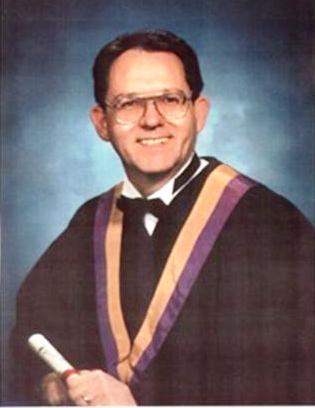 In 1993 Captain Ernest Scriver
(Church Army) was appointed Mission Chaplain, and enthusiastically plunged in to
his new career. Captain Scriver set about visiting ships and seafarers in the
spirit of his predecessors. Rev’d Ed Swayze was appointed Mission Chaplain and
Incumbent at St. Stephen the Martyr Church in 1994 after Captain Scriver’s
untimely passing.
In 1993 Captain Ernest Scriver
(Church Army) was appointed Mission Chaplain, and enthusiastically plunged in to
his new career. Captain Scriver set about visiting ships and seafarers in the
spirit of his predecessors. Rev’d Ed Swayze was appointed Mission Chaplain and
Incumbent at St. Stephen the Martyr Church in 1994 after Captain Scriver’s
untimely passing.
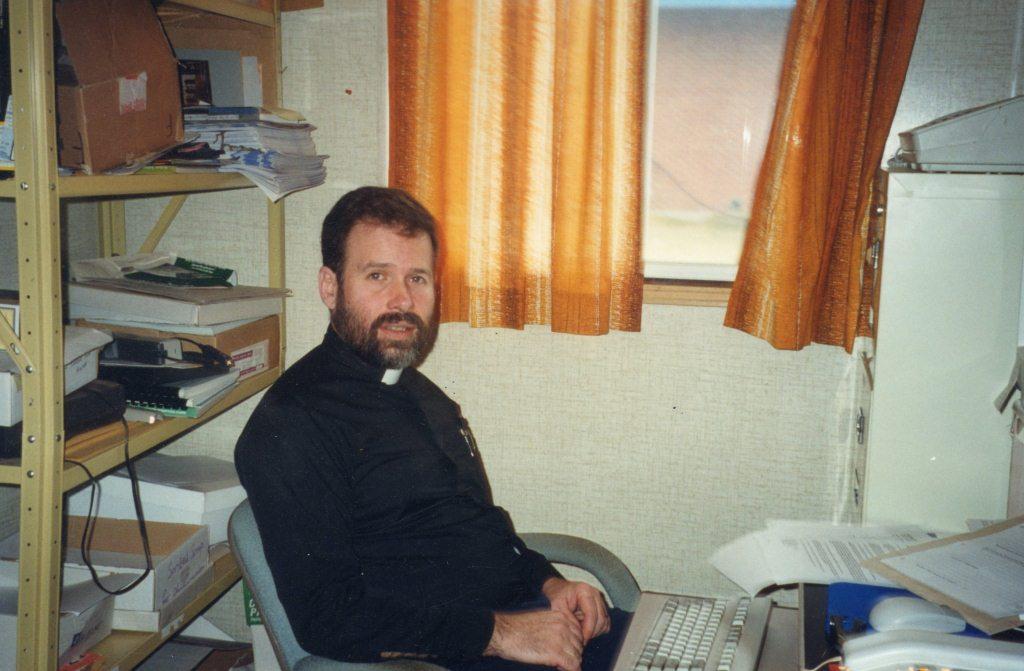 At the time Rev’d Swayze took
over as Chaplain, the memory of the Mission’s organization had largely been
lost and needed reinventing. A whole new pool of volunteers was recruited
to run the evening watches. An annual Volunteer Appreciation Social was
initiated and is now held every January at HMCS GRIFFON, Thunder Bay's Naval
Reserve Division, to acknowledge the
commitment of the many dedicated volunteers. Rev’d Swayze created a Watch Keepers and Drivers Handbook, a handy means of categorizing
procedures and policies, and ensured the formal adoption of the constitution and
by-laws.
At the time Rev’d Swayze took
over as Chaplain, the memory of the Mission’s organization had largely been
lost and needed reinventing. A whole new pool of volunteers was recruited
to run the evening watches. An annual Volunteer Appreciation Social was
initiated and is now held every January at HMCS GRIFFON, Thunder Bay's Naval
Reserve Division, to acknowledge the
commitment of the many dedicated volunteers. Rev’d Swayze created a Watch Keepers and Drivers Handbook, a handy means of categorizing
procedures and policies, and ensured the formal adoption of the constitution and
by-laws.
New ministries were initiated,
including the collection of warm clothing to keep seafarers – often not
prepared for the cold weather of Lake Superior – warm in the fall and spring.
Presentation of Christmas gift bags for all seafarers visiting the Centre in the
late fall was started and continues to this day, and is much appreciated by the
seafarers who receive them. The chapel was refurbished including making a new
altar and Rev’d Swayze also holds a monthly Eucharist at the Centre where all
are welcome.
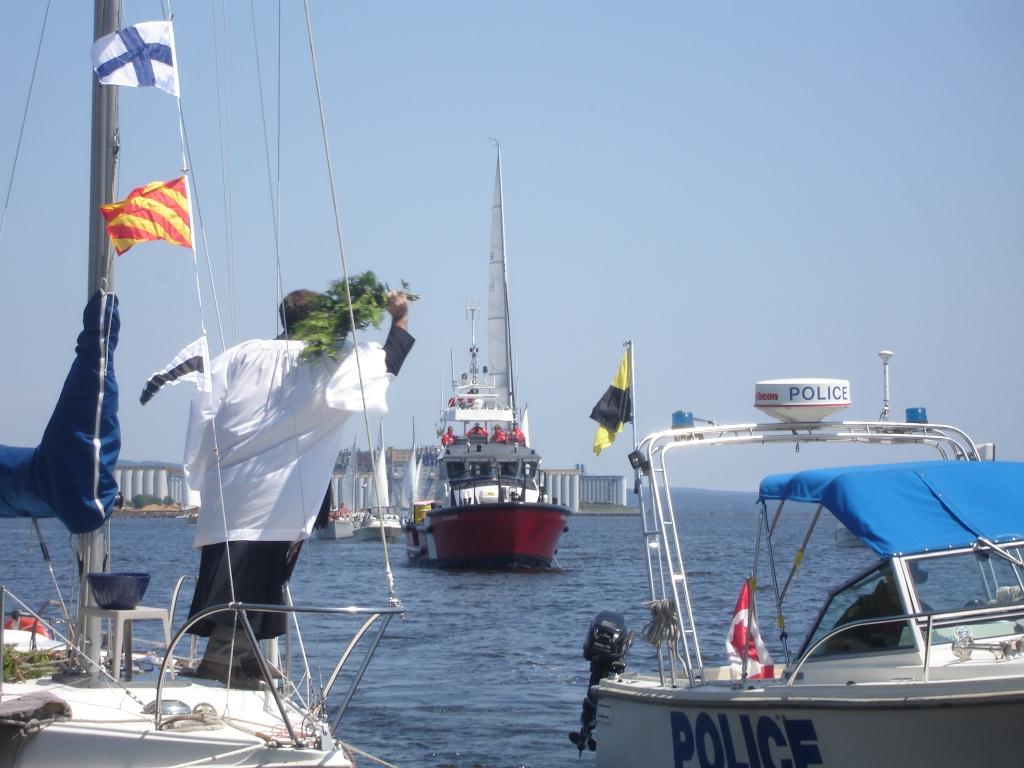 The annual Blessing of the
Fleet has been held every June since 2002, and is an opportunity for all
vessels, large and small, to receive a blessing before the start of the sailing season.
The annual Blessing of the
Fleet has been held every June since 2002, and is an opportunity for all
vessels, large and small, to receive a blessing before the start of the sailing season.
Most notable over time are the
many changes in technology that have aided the seafarer in connecting with their
families back home: long distance phone cards, cell phones, computers, and web
cams have made connecting with home much easier and cheaper. Many seafarers now
visit the Mission to take advantage of the wireless internet available to them,
as well as to relax ashore. Seafarers often mention to the volunteers that they
enjoy visiting the Thunder Bay Mission because the Centre is staffed with people
they can talk to - a wonderful compliment!
The Mission to Seafarers is
part of the maritime community in Thunder Bay, and in keeping with this theme,
in 2012 changed the name from Mission to Seafarers: Lakehead Branch to Mission
to Seafarers: Port of Thunder Bay. New ocean-going ships that fit the Great
Lakes are constructed every year, and as long as these vessels are built to fit
the St. Lawrence Seaway there will be a ministry here for the Mission.
Our Track into the Future
The Mission’s Board of
Directors is committed to improving the services offered to seafarers in Thunder
Bay, as well as improving the profile of the Mission throughout the City and
Region. To that end, it is imperative that the base of supporters, both
financial and volunteers, continues to grow in order that the important work of
the Mission can move forward. The value of the Mission to Seafarers to Thunder
Bay is that Christian people continue to visit ocean-going ships in port to
offer them hospitality regardless of faith background and a safe environment, as
ports can be dangerous. Indeed, the Centre works hard to ensure seafarers from
around the world view Thunder Bay as a welcoming and giving place – the city
with the Giant Heart!
Material adapted from Caring Across the Seas by Maureen
West and Gillian Ennis, published by the Mission to Seafarers, and A History of the Missions to
Seamen Lakehead Branch 1961 to 1993 by Marcia G. Dilley, PhD.
Mission
to Seafarers Chaplains in Thunder Bay
|
1962 – 1967 |
Rev’d Robert Lumley |
|
1967 – 1968 |
Rev’d Peter A. Hill |
|
1969 |
Captain Wayne Thomas (Church Army) |
|
1970 |
Captain D. Page (Church Army) |
|
1970 – 1973 |
Mr. William Tozer |
|
1974 |
Rev’d Gregory Lynn |
|
1974 - 1980 |
Rev’d Canon Alvin Thomson |
|
1980 – 1992 |
Rev’d Canon David Bradford |
|
1993 |
Captain Ernest Scriver (Church Army) |
|
1994 – present |
Rev’d Canon Ed Swayze |
Mission
to Seafarers: Port of Thunder Bay Home Page